الكلمات المفتاحية
تعلّّمية التاريخ
السياسة التعليمية الاستعمارية
الكتب المدرسية
التفاعل الثقافي
المركزية الأوروبية
الصور النمطية الثقافية
اليونسكو
السياسة التعليمية الاستعمارية
الكتب المدرسية
التفاعل الثقافي
المركزية الأوروبية
الصور النمطية الثقافية
اليونسكو
كيفية الاقتباس
نحو تعلّّمية التفاعل الثقافي: مفارقة الهوية والغيرية فيتدريس التاريخ في السياقين الاستعماري وما بعد الاستعماري. (2025). مجلة روافد, 29, 49-65. https://doi.org/10.83038/RJ.i29.y2024.13
الملخص
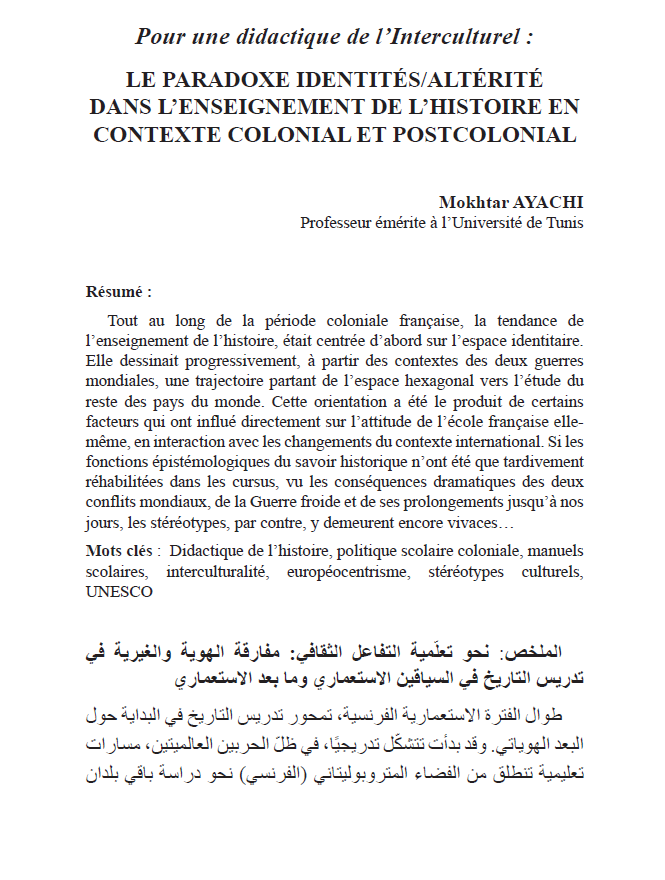
طوال الفترة الاستعمارية الفرنسية، تمحور تدريس التاريخ في البداية حول البعد الهوياتي. وقد بدأت تتشكّّل تدريجيًًا، في ظلّّ الحربين العالميتين، مسارات تعليمية تنطلق من الفضاء المتروبوليتاني )الفرنسي( نحو دراسة باقي بلدان العالم. وقد جاءت هذه التوجهات نتيجة عوامل متعدّّدة أثّّرت مباشرة في موقف المدرسة الفرنسية، بتفاعل مع التحوّّلات التي شهدها السياق الدولي. إذا كانت الوظائف الإبستيمولوجية للمعرفة التاريخية لم تُُدمج في المناهج الدراسية إلا في وقت متأخر، بسبب التداعيات الدراماتيكية للحربين العالميتين، والحرب الباردة وامتداداتها حتى اليوم، فإن الصور النمطية، في المقابل، لا تزال
حاضرة بقوّّة..

هذا العمل مرخص بموجب Creative Commons Attribution-NonCommercial 4.0 International License.
Downloads
Download data is not yet available.